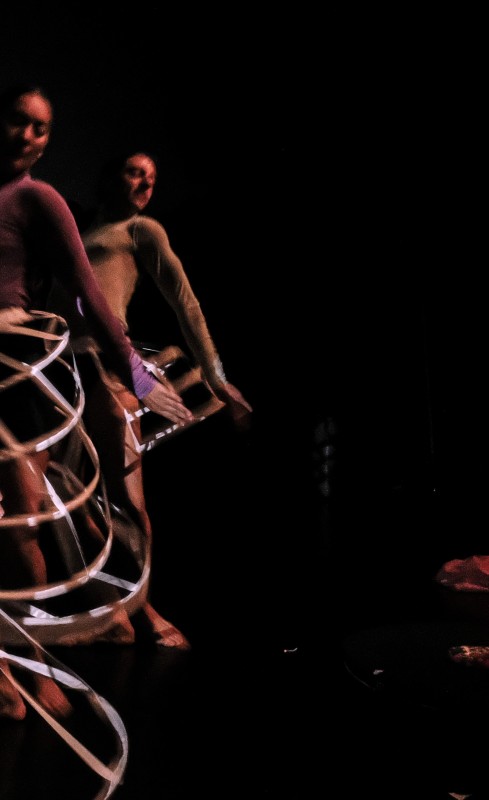
In response to an invitation from the Dance Life Festival Nairobi to present Johanna’s piece valse, valse, valse, which explores the revolutionary and intoxicating potential of the waltz, she reflects on what this work means in a new context—far removed from a Eurocentric perspective, yet situated in a country with a colonial history. The waltz is associated with a certain white upper class, cultivated in the countries of former colonial powers. Anyone who delves deeper into the history of the waltz will discover that this couple’s dance was actually more commonly danced by the working class and in rural taverns before the upper class appropriated the waltz as a standard dance and subjected it to increasingly strict forms and rules. This can be seen, for example, in the very strict upright posture, which was only invented much later. In the 19th century, the waltz was even banned at one point, out of fear that the dancers might enter a trance-like state through the spinning. Together with four professional dancers from Nairobi, Johanna explores what the waltz—as a phenomenon of transformation and appropriation—means from the performers’ perspective, and what connotations remain or even emerge in a different context. They examine the movement of the turn and what ultimately remains of it as a language of movement.
by Johanna Heusser
Cast
Choreographie Johanna Heusser
Performance en cours de distribution
Dramaturgie et oeil extérieur Adam Chenjo
Production et diffusion Maxine Devaud / oh la la - performing arts production